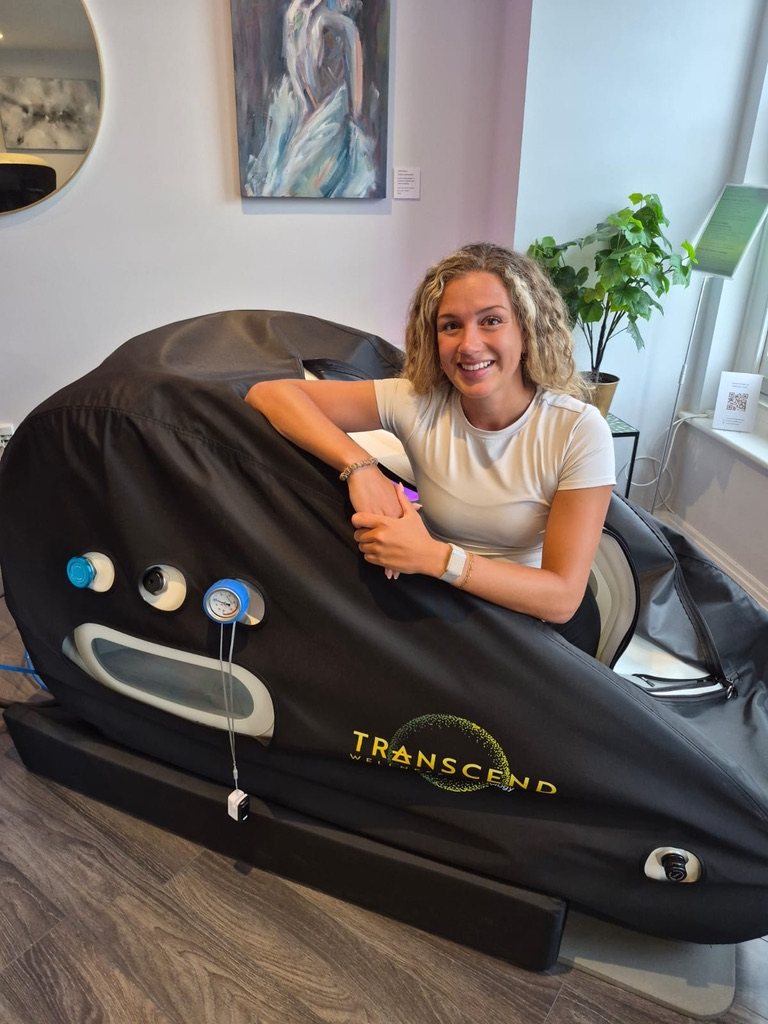
Picture the moment. You’re at the top of the stairs, slippers on, and there it is: a long black pod with round windows and a zip down the side.
And a small voice in your head says: absolutely not.
Almost everyone hears that voice. The ones who book anyway are the ones we want to tell you about.
First, Angelo explains everything
Nothing happens in a rush. Angelo sits down with you and asks a few short health questions, so you both know the chamber is right for you today. A cold or blocked ears means another day; some things mean a quick word with your doctor first. He’ll tell you plainly either way.
Then he opens the chamber and lets you look inside. That’s when the story changes. It’s white in there. There’s room to sit up. There are windows on every side. You can climb in and sit for a minute before anything starts, and you hold the zip. Nothing happens until you say so.
The first ten minutes: your ears
You lie back on a pillow, under a blanket, with a soft mask over your nose and mouth. The pressure rises slowly, to about what you’d feel four or five metres under water, the bottom of a deep swimming pool. Your ears pop, like on a plane. Swallow, yawn, or pinch your nose and blow gently. If it’s uncomfortable, say so and Angelo slows it down.
What’s actually going on
Ordinary air is 21% oxygen. Through the mask, you breathe up to 98%. Your red blood cells are already almost full, so the pressure does something different: it lets extra oxygen dissolve into your plasma, the liquid part of your blood. Same reason a sealed bottle keeps its fizz.
Then: nothing. Gloriously nothing.
This is the part nobody expects. Once the pressure is up, there is nothing to do for the rest of the hour. You can read. You can scroll. Most people do neither. Within ten minutes, most of them are asleep, including plenty who arrived certain they’d never relax in there.
When was the last time you had an hour where nobody could reach you?
Coming out
The pressure comes down slowly, your ears pop again, and you unzip. People usually come out a little dozy and very clear-headed. Then you talk it through with Angelo: whether he thinks it’s for you, and what a sensible next step would be. No pitch.
“But I’m claustrophobic”
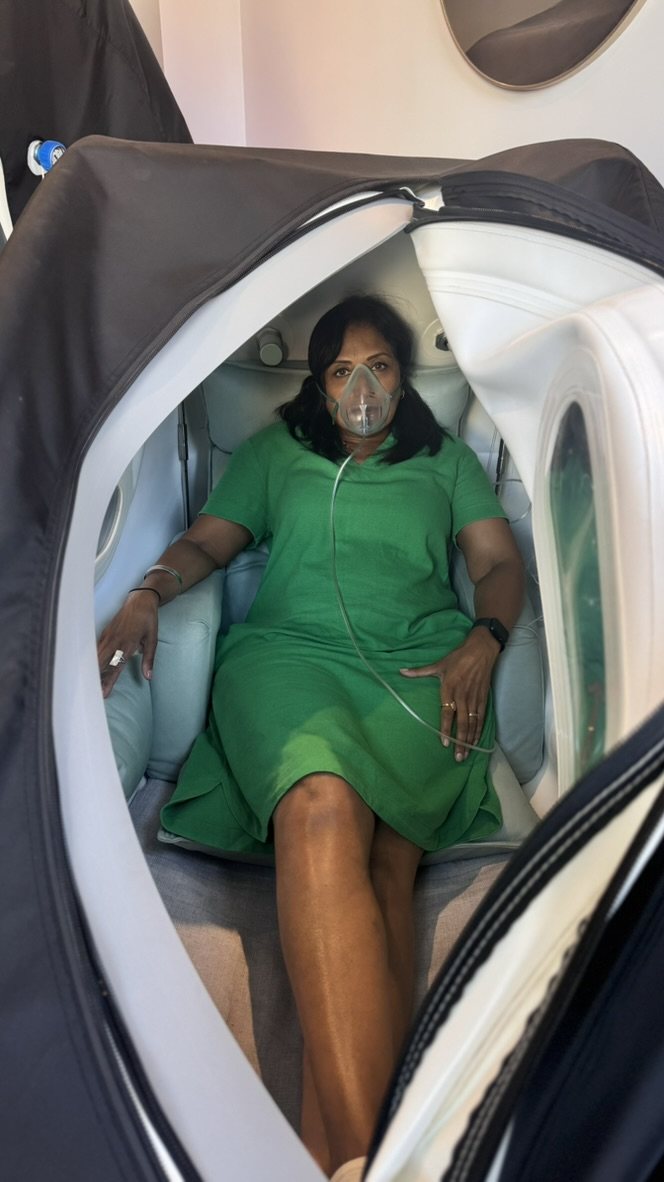
Then you’re exactly who this part is for. You can see out of every side. You can sit up. You control the zip. Angelo is right outside the whole hour, and you can talk to him.
And if you’d like to talk it through first, Rizwana is an EMDR therapist and has worked with people with claustrophobia. Message us on WhatsApp or call 0208 058 3456 and ask for her. You can also reach Rizwana directly on 07956 466393 or at rizwanavirdee.com.
The people who come back
Some feel a difference on the walk back to the station. For others it builds over a few weeks. Nobody here will tell you it’s a magic wand. What we will tell you is that the people who keep coming are usually the ones who nearly didn’t book at all. The nervous ones. The “absolutely not” ones.
Your first hour is £45. It’s the easiest way to find out which one you are.